NEW ARTICLE: Programmable oil/water separation performance of wood-based membranes via structural anisotropy and delignification

A new article from Ning Yan’s lab has been published in the Journal of Cleaner Production written by Kaiwen Chen, Cheng Hao, Luyao Chen, Fengze Sun, Yujing Tan, Wenjuan Zhao,
Hui Peng, Tianyi Zhan, Jianxiong Lyu and Ning Yan.

You can find the article here.

Abstract

Wood-based membranes offer a promising, sustainable platform for oil/water separation due to their intrinsic porosity, renewability, and structural anisotropy. However, current approaches often require complex chemical modifications and lack a systematic understanding of how structural and processing parameters govern separation performance. This study introduced a simple yet robust strategy leveraging intrinsic structural anisotropy of natural wood to fabricate high-performance membranes without synthetic coating or surface functionalization. By altering the cutting direction, two distinct membrane architectures were obtained: cross-section membranes with longitudinal channels enabled the gravity-driven separation of light oil/water mixtures, while longitudinal membranes with interconnected transverse pores facilitated vacuum-assisted separation of oil-in-water emulsions. Quantitative analysis revealed that delignification time and thickness jointly governed wetting and transport behavior. Increasing delignification reduced the water contact angle from ∼115° to <40°, enabling tunable flux (∼90–1000 L m−2·h−1) and efficiency (75–99.9 %). For CW membranes, flux decreased and efficiency increased with thickness—thinner samples (0.5–1 mm) exhibited the highest flux (∼995 L m−2·h−1) but moderate efficiency (85–95 %), while thicker ones (∼3 mm) achieved up to 99.8 % efficiency at lower flux. For LW membranes, a similar trade-off was observed: thinner membranes (0.5–1 mm) offered higher flux (75–95.9 % efficiency), intermediate thickness (1–2 mm) balanced both (up to 99.1 %), and thicker membranes (∼3 mm) provided the highest efficiency (98.9–99.9 %) but reduced flux. Through systematic characterization, this study established a clear structure–property–performance relationship, revealing how processing parameters (cutting orientation, thickness, and lignin content) govern key structural features and, in turn, separation efficiency and flux. This work not only provides a sustainable route for fabricating high-performance membranes using natural materials but also delivers quantitative mechanistic insights and predictive design principles for liquid–liquid separation, with broad relevance for environmental remediation and resource recovery.

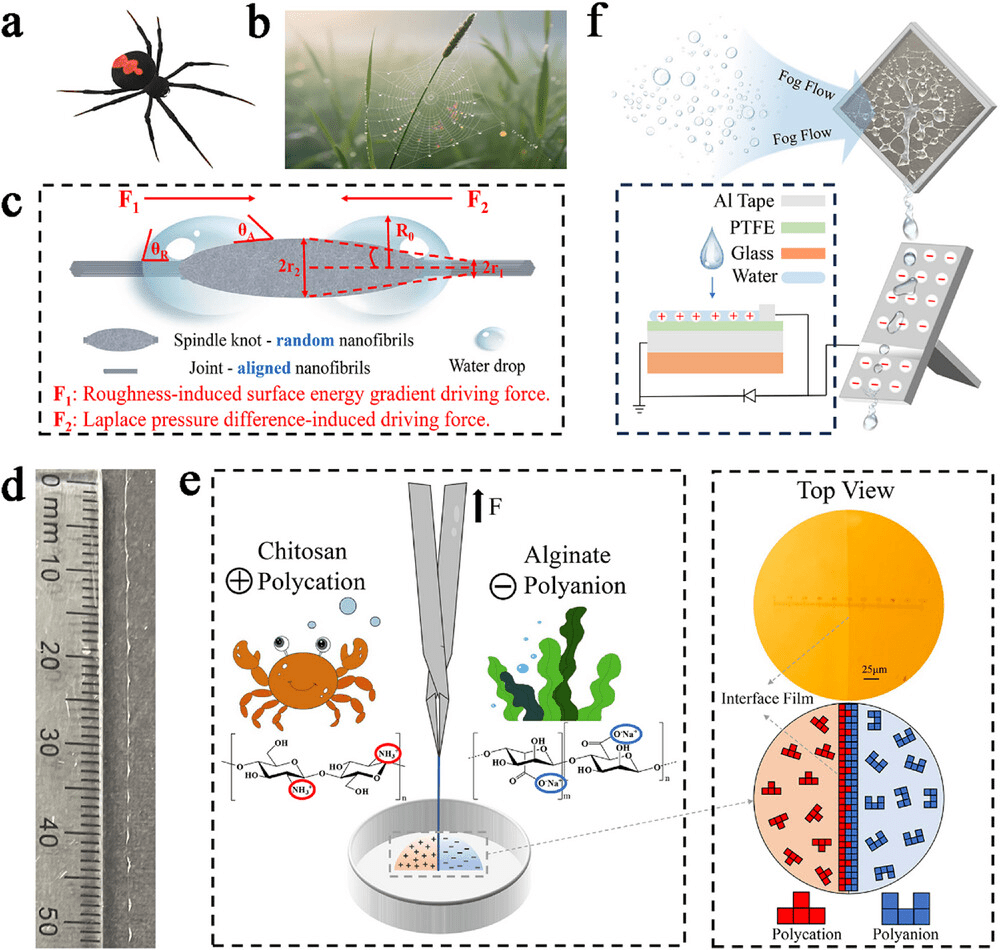
NEW ARTICLE: Biobased Bionic Spider Silk via Electrostatic Complexation for Simultaneously Harvesting Atmospheric Water and Triboelectric Energy

A new article from Ning Yan’s lab has been published in the Advanced Functional Materials written by Qin Chen, Araz Rajabi-Abhari, Tongtong Fu, Haonan Zhang, Siqi Huan, Liang Chen, Jinchao Li, Cheng Hao, Yaping Zhang and Ning Yan

You can find the paper here.

Abstract

Atmospheric water harvesting has emerged as a sustainable solution for overcoming water and energy shortages. Herein, an entirely biobased bionic spider silk (chitosan–sodium alginate filament [CSF]) is prepared using an interfacial, aqueous, and straightforward polyelectrolyte complexation with a continuous drawing technique, simultaneously harvesting water and triboelectric energy from ambient humidity. CSF exhibits a periodic spindle-shaped structure resembling spider silk, with surface roughness conducive to atmospheric water harvesting. The success of the electrostatic complexation technique for CSF is confirmed by water solubility, Fourier-transform infrared spectroscopy, and thermogravimetric analyses. The production yield of CSF reaches the maximum of 99.36% by controlling the substrate type and polyelectrolyte mass ratio. Moreover, fog-harvesting efficiency peaks at 1552.83 mg cm−1 h−1 (1.0 wt.% polyelectrolyte concentration), demonstrating concentration-dependent performance. Subsequently, CSF is woven into a bionic spider web (CSW) for simultaneous water and energy harvesting. Through parametric optimization, the CSW-based droplet triboelectric nanogenerator system achieves 180 V and 72.25 µW output. When deployed in a high-humidity greenhouse, the system powers 80 light-emitting diodes, a hygrometer (thermometer), and a stopwatch. This study presents a straightforward, effective, and green strategy for simultaneously harvesting water and energy from the ambient environment, providing fresh water and renewable energy to enhance sustainability.

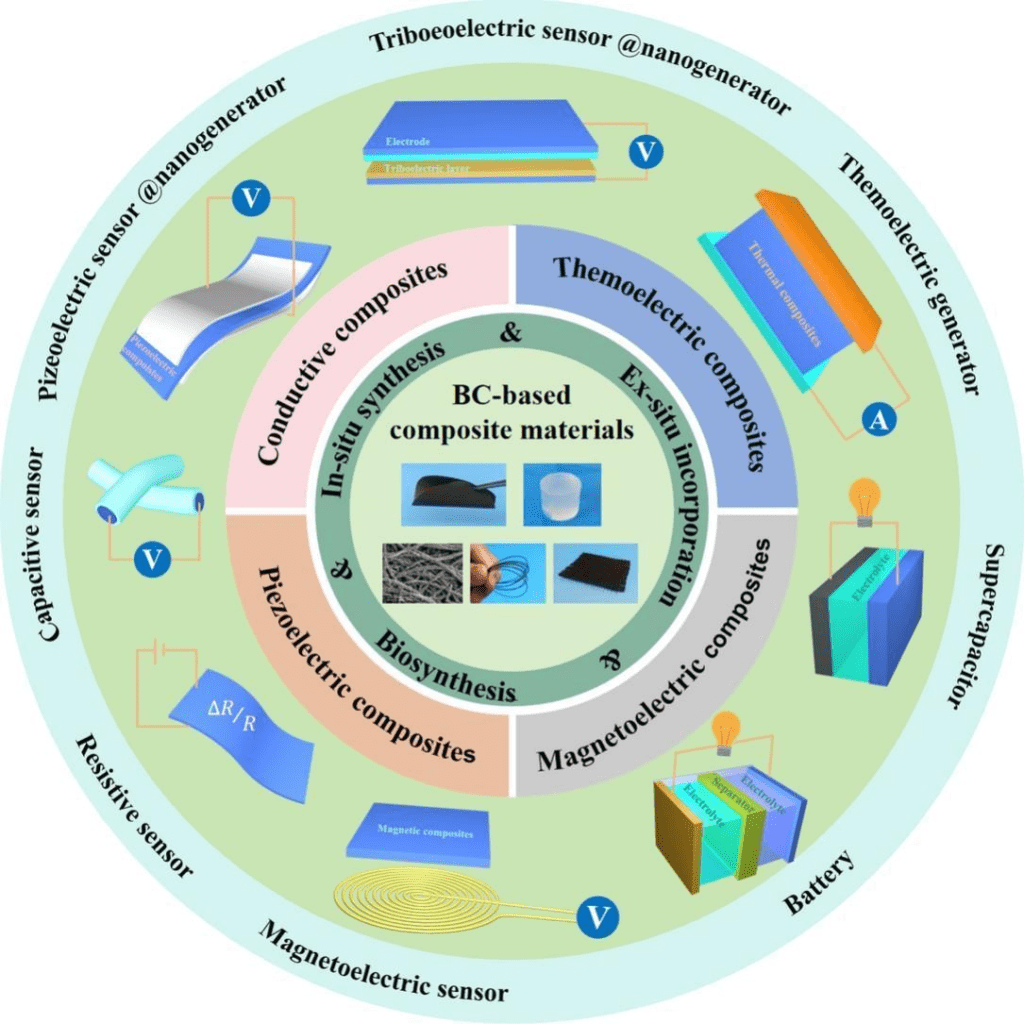
New Article: Bacterial cellulose as green matrix material for environmental-friendly electronic devices

A new article from Ning Yan’s lab has been published in the Carbohydrate Polymers written by Sanming Hu, Zhijun Shi, Kun Chen, Xiao Chen, Hongfu Zhou, Ning Yan, Guang Yang,

You can find the paper here.

Abstract

The proliferation of electronic devices has led to a substantial increase in non-degradable electronic waste (e-waste), posing significant environmental challenges. Consequently, biodegradable natural polymers have garnered considerable attention as sustainable alternatives to conventional non-degradable materials in electronic applications. Bacterial cellulose (BC), a natural polymer characterized by abundant hydroxyl groups and a three-dimensional (3D) nanonetwork structure, exhibits exceptional properties including high purity, superior mechanical strength, excellent water retention capacity, non-toxicity, renewability, and complete biodegradability. These unique attributes, coupled with its distinctive structural features, render BC as a promising green matrix material for developing functional composites in eco-friendly electronic devices. This review provides a systematic analysis of various eco-friendly composite materials derived from BC, covering conductive, piezoelectric, magnetoelectric, and thermoelectric composites. Additionally, the fabrication methodologies for BC-based composites, including in-situ chemical synthesis, ex-situ incorporation, and biosynthesis techniques, are comprehensively analyzed. Furthermore, the applications of BC-based composites was explored in diverse fields such as sensors, energy storage systems (batteries and supercapacitors), and energy harvesting devices (nanogenerators). Finally, we deliver a critical evaluation of the current challenges and future research directions for BC-based composites in the development of sustainable electronic devices.

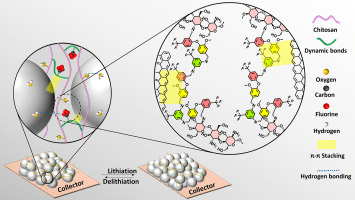
New Article : One-step dual process strategy for holey graphite towards scalable and stable lithium-ion battery anodes

A new article from Ning Yan’s lab has been published in the Journal of Materials Chemistry A written by Keerti Rathi, Viktoriya Pakharenko, Otavio Augusto Titton Dias, Colin van der Kuur, Ning Yan and Mohini Sain

You can find the paper here.

Abstract

Our research demonstrates a one-step dual-process acid treatment approach for modifying graphite, which increases its interlayer distance and generates nanoscale holes, thereby effectively shortening the lithium-ion diffusion pathway without the need for heteroatom doping. Compared with pristine graphite (PG), the expanded holey graphite (EG) produced by this process achieves significantly enhanced electrochemical performance while maintaining structural integrity. The EG shows excellent electrochemical performance, reaching a specific capacity of 179.45 mAh g−1 and retaining 89.3% of its capacity after 300 cycles in a full pouch cell combined with a commercial NMC523 cathode. High coulombic efficiency (approximately 93.8%) and improved cycling stability confirm the durability of the etched graphite. Beyond mere performance considerations, the study elucidates the degradation mechanisms inherent in commercial lithium-ion batteries (LIBs), thereby offering dependable guidance for electrode surface engineering and the optimization of cycling protocols. With this scalable and impurity-free approach to modification, purified etched graphite emerges as a promising candidate for next-generation LIB anodes, satisfying the high energy requirements and durability necessary for electric vehicles and advanced energy storage systems.

New Article : Green, Sustainable, and Melt-Compoundable PLA Composites Reinforced with Spray-Dried Lignocellulosic Nanofibrils for Enhanced Barrier and Mechanical Properties

A new article from Ning Yan’s lab has been published in Chemical Engineering Journal written by To Yu Troy Su, Rafaela Aguiar, Nello D. Sansone, Cheng Hao, Ning Yan, and Patrick C. Lee.

You can find the paper here.

Abstract

This study presents the first integration of spray dried (SD), non-modified, lignocellulosic nanofibrils (LCNF) into polylactic acid (PLA) by melt blending. Originating from industrial forestry waste, SD LCNFs are an inexpensive, non-toxic, and abundantly accessible drop-in filler whose production is facile, continuous, and highly scalable. Addition of SD LCNF into PLA yields enhanced barrier and mechanical performance due to SD LCNF’s alteration of the crystalline microstructure and fracture dynamics. Incorporating 1–1.5 wt% of SD LCNFs into PLA results in significant enhancements: tensile strength by 32.8%, toughness by 44.6%, water vapor barrier performance by 38.8%, and oxygen barrier properties by 26.4%, compared to neat PLA. Their nucleating capability hastens isothermal crystallization of PLA composites by over 90%, enabling faster processing times. For the first time, in-situ polarized optical microscopy is used to visualize fracture toughening mechanisms in PLA under strain, revealing a direct link between mechanical property improvements and the role of SD LCNFs as craze nucleators in PLA. Additionally, the in-situ observation of crystallization kinetics highlights how SD LCNFs influences PLA microstructure, correlating these structural changes with enhanced barrier and mechanical properties. The composite’s optical clarity and UV shielding capabilities are assessed, confirming its potential for specialty packaging applications.

New Article: Bioinspired wood-based wedge-shaped surface with gradient wettability for enhanced directional liquid transport and fog harvesting

A new article from Ning Yan’s lab has been published in Materials Horizens written by Kaiwen Chen, Luyao Chen, Xianfu Xiao, Cheng Hao, Haonan Zhang, Tongtong Fu, Wei Shang, Hui Peng, Tianyi Zhan, Jianxiong Lyu and Ning Yan.

You can find the article here.

Abstract
Inspired by cactus spine and desert beetle back structures, we developed a wood-based wedge-shaped surface with gradient wettability for efficient and controlled spontaneous directional liquid transport. Utilizing the natural anisotropic and porous structure of wood, the wedge-shaped surface exhibited a continuous gradient wettability after chemical treatments combined with UV-induced modifications. The resulting surface enabled highly efficient directional liquid transport with transport rates reaching up to 8.9 mm s−1 on horizontal placement and 0.64 mm s−1 on vertical surfaces against gravity. By integrating geometric curvature and surface energy gradients, the innovative design achieved synergistic Laplace pressure-driven and wettability-driven liquid motions. To further demonstrate its potential for practical application, a fog-driven power device constructed using the gradient wettability wood with cactus spines not only enhanced water harvesting and energy conversion capabilities but also offered an environmentally friendly system. This study expanded the design toolbox for bioinspired liquid management surfaces, offering promising applications in water resource management, energy harvesting, and microfluidic devices.

New Article: Preparing Flexible, Ductile, and Transparent Lignocellulose Composite Films via a Chemical (Betaine) and Mechanical (3D Printing) Combined Approach

A new article from Ning Yan’s lab in collaboration with Dan Li has been published in ACS Sustainable Chemistry & Engineering written by Yunxia Yang, Dan Li, Ning Yan and Fu Guo.

You can find the article here

Abstract Image

Abstract

Developing highly mechanically resilient and transparent cellulose films is critical for use in next-generation degradable electronics. The use of synthetic plasticizers and additives is a detour that impairs the biocompatibility and biodegradability of the final product. This study utilized betaine, which can be easily obtained from vegetables, in preparing flexible, ductile, and highly transparent lignocellulose nanofibrils (LCNFs) films through direct ink writing (DIW). An optimum 40 wt % betaine content of dry LCNFs endowed the films with outstanding optical transmittance (87%) at 800 nm. The maximum elongation at break of the betaine-containing lignocellulose nanofibril (LCNFsB) film reached 13.9 ± 0.5%, representing a 309% increase compared to the plain LCNFs film. We systematically investigated the shear-induced alignment between the DIW and doctor blade patterning (weak shear force) approaches. The DIW printed films exhibited an overall more uniform arrangement of fibrils and better control during the aligned film preparation. Thus, a higher tensile strength (40 ± 0.7 MPa) of the PLCNFsB-40% film than that of the DBLCNFsB-40% film (29 ± 1.19 MPa) was achieved. Overall, a combination approach of adding a green and inexpensive additive of betaine (chemical) and shear force-induced fibril orientation (mechanical) contributes to LCNFs films for applications in next-generation flexible electronics.

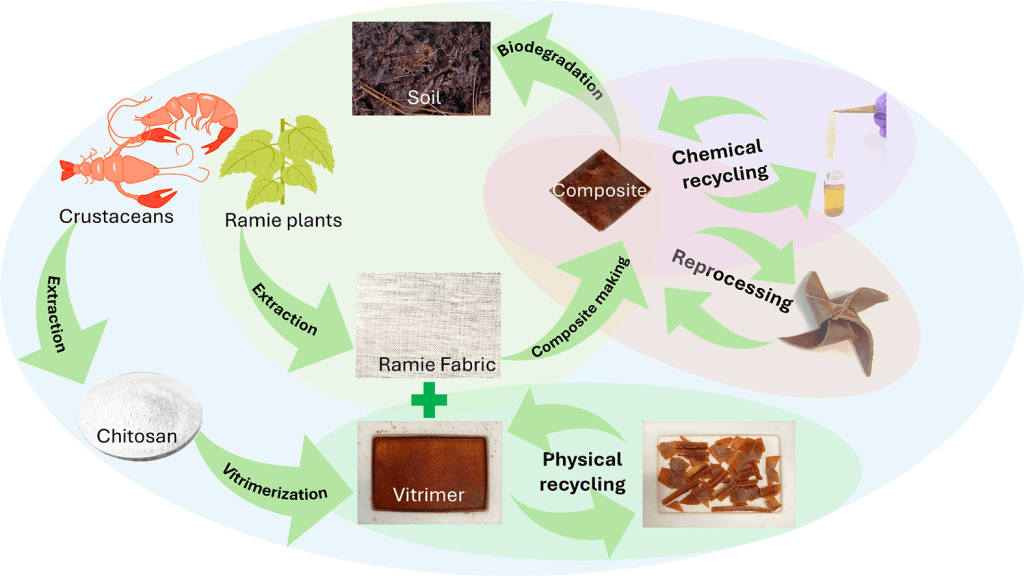
New article: Chitosan-based partial Vitrimer for making eco-friendly multifunctional ramie fabric reinforced composite

A new article from Ning Yan’s lab has been published in International Journal of Biological Macromolecules written by Mohammad H. Mahaninia and Ning Yan.

You can find the article for free here until June 03, 2025.

Abstract

In this study, a novel chitosan-based partial vitrimer was synthesized and used as the matrix material to fabricate eco-friendly fully bio-based polymer composites reinforced with ramie fabric. The chitosan-based partial vitrimers were prepared by a facile and green chemistry method without the use of catalyst. It contained amide bonds that could undergo transamidation bond exchange reactions autocatalyzed by the nearby functional groups. Using this partial vitrimer, a recyclable/biodegradable biocomposite reinforced with 40 wt% of ramie fabric was fabricated by using the hot-pressing method. The biocomposite showed excellent mechanical properties (e.g., tensile strength of 124 MPa) compared to other chitosan-based natural fiber composites reported in the literature. Benefiting from the self-healing, shape memory, and reprocessibility of the chitosan-based vitrimeric matrix, the resulting ramie fabric biocomposite also exhibited remoldability, shape memory, and self-adhesive properties. The ramie fabric composite was fully biodegraded in 12 weeks while the vitrimeric matrix alone biodegraded only in 2 weeks. These findings highlight the potential of chitosan-based partial vitrimer in developing high-performance, multifunctional, and sustainable biocomposites for various applications.

New article: Integrated emulsion separation and fog collection with functionalized Janus wood membrane for water scarcity solutions

A new article from Ning Yan’s lab has been published in npj Clean Water written by Kaiwen Chen, Jianyi Zhu, Cheng Hao, Haonan Zhang, Yujing Tan, Xianfu Xiao, Fengze Sun, Xuewen Han, Hui Peng, Tianyi Zhan, Jianxiong Lyu & Ning Yan.

You can find the article here.

Abstract

Global climate change has exacerbated water scarcity, while traditional water treatment technologies are often unsustainable due to high energy consumption and negative environmental impacts, posing an urgent need for a sustainable solution. This study developed a novel wood-based flexible Janus membrane coupled with a spine structure for efficient oil-water emulsion separation and fog harvesting. The Janus wood membrane showed high separation efficiency (> 99.6%), high filtration flux (water-in-oil and oil-in-water emulsions exceeded 810 L/m²·h and 747 L/m²·h, respectively), and good reusability. Additionally, the introduction of spine and conical pores significantly enhanced fog collection efficiency (19.23 kg/m²·h), expanding the application potential of Janus membranes. Moreover, this Janus wood membrane offered excellent mechanical properties, dimensional stability, mildew resistance, and environmental benefits. This study underscored the potential of Janus membranes in water management and liquid separation, providing a sustainable solution to water scarcity.

New article: Starch-based reversible adhesive: Effect of off-stoichiometric ratios on transesterification vitrimer properties

A new article from Ning Yan’s lab has been published in Carbohydrate Polymers written by Nicole Tratnik, Nicolas R. Tanguy, Daniel J. Davidson, Ning Yan.

You can find the article here.

Abstract

Bio-based epoxy vitrimers are gaining attention as sustainable alternatives to traditional epoxies due to renewable starting materials and recyclability, enabling material circularity. Transesterification, a dynamic bond reaction mechanism in vitrimers, relies on ample hydroxy and esters groups in the polymer network to rearrange under moderate conditions. To reduce reliance on petroleum we investigated starch, a natural feedstock rich in hydroxy groups. Ester bond densities were adjusted with an ester containing crosslinker (pentaerythritol tetrakis(3-mercaptopropionate) (PETMP)) at various epoxy to crosslinker molar ratios (1:0.7, 1:1, 1:1.25 and 1:1.5) with TEMPO as the catalyst. The reformation efficiency of the vitrimer increased to 239 % from 31 % when the ratio changed from 1:1 to 1:1.5. Essential dynamic behavioral parameters (dynamic bond exchange activation energy (Ea(d)), Arrhenius prefactor (τ0), and freezing transition temperature (Tv)) were analysed. Adding excess amount of crosslinker decreased the Tg, crosslink density, Ea(d) and Tv of the starch-based epoxy vitrimer. Adhesion tests on birch veneer found that a 1:1.5 ratio had the highest adhesion performance at 3.02 ±0.7 MPa with an adhesion recovery as high as 91 % averaging 61 +/− 23 %. These insights into density of dynamic bonds and active functional groups will contribute to developing new bio-based vitrimers with designed circularity.