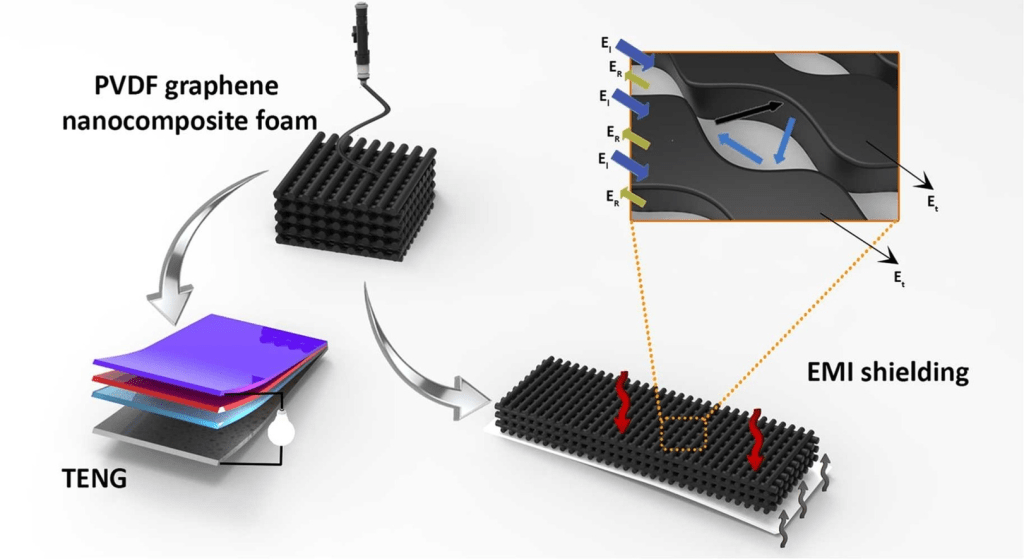
New Article: Cultivation of In situ foam 3D-printing: Lightweight and flexible triboelectric nanogenerators employing polyvinylidene fluoride/graphene nanocomposite foams with superior EMI shielding and thermal conductivity

A new article out of a collaboration with Amirjalal Jalali from Dr. Mohini Sain and Dr. Chul B Park’s labs has been published in Nano Energy written by Amirjalal Jalali, Araz Rajabi-Abhari, Haonan Zhang, Tanmay Gupta, Otavio Augusto Titton Dias, Md Akibul Islam, Tobin Filleter, Ning Yan, Mohini Sain, and Chul B Park.

A free copy of the article can be found here until January 31, 2025.

Abstract

This study explores the novel realm of foam 3D-printing, a convergence of foaming and 3D-printing techniques, with profound implications for multifunctional stretchable electronics. Through scalable in situ foam printing, lightweight and stretchable foamed polyvinylidene fluoride (PVDF)/graphene nanocomposites were successfully fabricated. By incorporating varying percentages (2, 3, 5, and 7 wt%) of graphene into PVDF, alongside a 3 wt% foaming agent for foamed 3D-printing filaments, a diverse range of filaments were fabricated. Next, employing fused filament fabrication (FFF), 3D-printed PVDF nanocomposites and nanocomposites foams were produced. Both shear and elongational rheological tests, respectively, corroborated that the incorporation of a foaming agent and graphene amplified the shear-thinning behavior and instigated strain hardening in the PVDF nanocomposite foam, rendering them viable options for foam 3D-printing. The resulting materials exhibited promising electrical and thermal conductivity attributes, as well as effective electromagnetic interference (EMI) shielding properties. The additional nanofiller content significantly augmented both electrical and thermal conductivity, further enhanced by the introduction of a cellular structure. Notably, foamed 3D-printed PVDF nanocomposites containing 7 wt% of graphene demonstrated an EMI shielding effectiveness (SE) of 36 dB distinguished by minimal reflectivity and predominant absorption characteristics. X-ray diffraction (XRD) analysis indicated that the in situ foam 3D-printing facilitates the formation of the β-phase. The printed specimens were deployed as the tribonegative element in the Triboelectric Nanogenerator (TENG) system. The fabricated TENG displayed notable efficiency, as evidenced by the foamed 3D-printed PVDF, which generated an output voltage of 270 V and a current of 5 μA, successfully illuminating 80 Light Emitting Diode (LED) lights. Meanwhile, the 3D-printed nanocomposite foams with 3 wt% nanofiller exhibited superior performance, achieving an output voltage of 550 V and a current of 11 μA. This investigation underscores the potential of the in situ foam 3D-printing for the development of advanced lightweight and flexible energy storage devices.

New Article: Highly Conducting and Ultra-Stretchable Wearable Ionic Liquid-Free Transducer for Wireless Monitoring of Physical Motions

A new article from Ning Yan’s lab has been published in Macromolecular Rapid Communications written by Nicolas R. Tanguy, Araz Rajabi-Abhari, Eric Williams-Linera, Zheyuan Miao, Nicole Tratnik, Xiao Zhang, Cheng Hao, Alvin Virya, Ning Yan, and Ronan Le Lagadec.

You can find the article here

Abstract

Wearable strain transducers are poised to transform the field of healthcare owing to the promise of personalized devices capable of real-time collection of human physiological health indicators. For instance, monitoring patients’ progress following injury and/or surgery during physiotherapy is crucial but rarely performed outside clinics. Herein, multifunctional liquid-free ionic elastomers are designed through the volume effect and the formation of dynamic hydrogen bond networks between polyvinyl alcohol (PVA) and weak acids (phosphoric acid, phytic acid, formic acid, citric acid). An ultra-stretchable (4600% strain), highly conducting (10 mS cm-1), self-repairable (77% of initial strain), and adhesive ionic elastomer is obtained at high loadings of phytic acid (4:1 weight to PVA). Moreover, the elastomer displayed durable performances, with intact mechanical properties after a year of storage. The elastomer is used as a transducer to monitor human motions in a device comprising an ESP32-based development board. The device detected walking and/or running biomechanics and communicated motion-sensing data (i.e., amplitude, frequency) wirelessly. The reported technology can also be applied to other body parts to monitor recovery after injury and/or surgery and inform practitioners of motion biomechanics remotely and in real time to increase convalescence effectiveness, reduce clinic appointments, and prevent injuries.

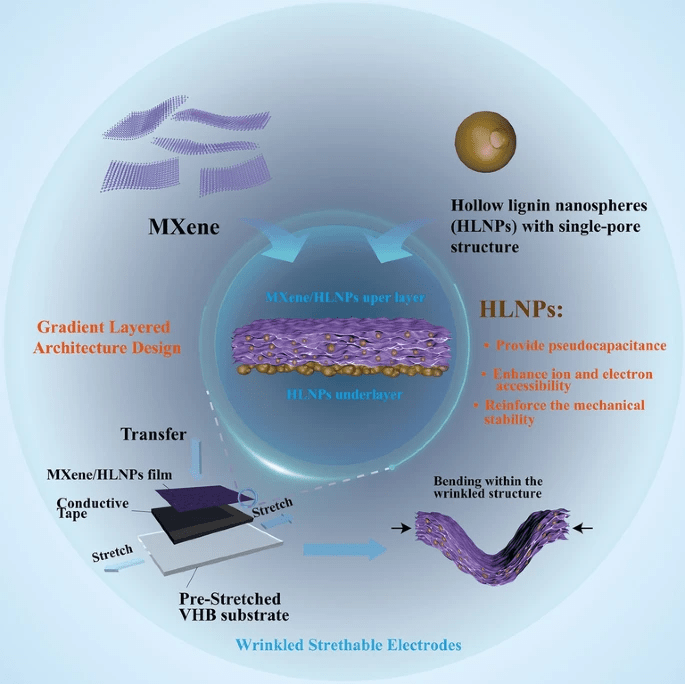
New Article: Gradient-Layered MXene/Hollow Lignin Nanospheres Architecture Design for Flexible and Stretchable Supercapacitors

A new article from Ning Yan’s lab has been published in Nano-Micro Letters written by Haonan Zhang, Cheng Hao, Tongtong Fu, Dian Yu, Jane Howe, Kaiwen Chen, Ning Yan, Hao Ren and Huamin Zhai.

You can find the article here

Abstract

With the rapid development of flexible wearable electronics, the demand for stretchable energy storage devices has surged. In this work, a novel gradient-layered architecture was design based on single-pore hollow lignin nanospheres (HLNPs)-intercalated two-dimensional transition metal carbide (Ti3C2Tx MXene) for fabricating highly stretchable and durable supercapacitors. By depositing and inserting HLNPs in the MXene layers with a bottom-up decreasing gradient, a multilayered porous MXene structure with smooth ion channels was constructed by reducing the overstacking of MXene lamella. Moreover, the micro-chamber architecture of thin-walled lignin nanospheres effectively extended the contact area between lignin and MXene to improve ion and electron accessibility, thus better utilizing the pseudocapacitive property of lignin. All these strategies effectively enhanced the capacitive performance of the electrodes. In addition, HLNPs, which acted as a protective phase for MXene layer, enhanced mechanical properties of the wrinkled stretchable electrodes by releasing stress through slip and deformation during the stretch-release cycling and greatly improved the structural integrity and capacitive stability of the electrodes. Flexible electrodes and symmetric flexible all-solid-state supercapacitors capable of enduring 600% uniaxial tensile strain were developed with high specific capacitances of 1273 mF cm−2 (241 F g−1) and 514 mF cm−2 (95 F g−1), respectively. Moreover, their capacitances were well preserved after 1000 times of 600% stretch-release cycling. This study showcased new possibilities of incorporating biobased lignin nanospheres in energy storage devices to fabricate stretchable devices leveraging synergies among various two-dimensional nanomaterials.

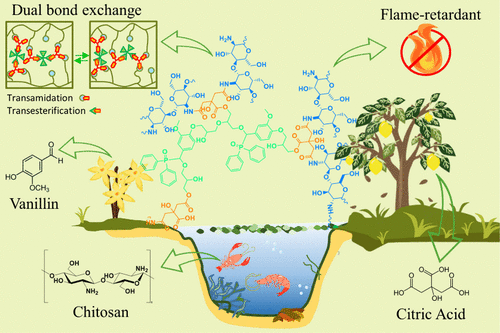
New Article: Catalyst-Free Biodegradable Chitosan-Based Dual Dynamic Covalent Networks with Self-Healing and Flame-Retardant Properties

A new article from Ning Yan’s lab has been published in ACS Sustainable Chemistry & Engineering written by Mohammad H. Mahaninia and Ning Yan.

You can find the article here

Abstract

Synthesizing covalent adaptable networks (CANs) from chitosan has been difficult due to its inherent insolubility in organic solvents. In this study, we report a facile approach for obtaining biobased flame-retarding CANs using chitosan as the starting material without dissolving it. These novel CANs were prepared via a dual cross-linking strategy in which chitosan consecutively reacted with citric acid and a vanillin-based cross-linker containing a flame-retarding moiety. The chitosan-based CANs attained dual dynamic bond-exchange sites resulting from generation of amide and ester linkages, which enabled them to perform self-healing and recyclability. They also possessed remarkable flame-retarding performance (e.g., limiting oxygen index of 41.5% and UL-94 V-0 rating), surpassing other chitosan-based flame retardants reported in the literature to date. By investigating the CAN’s response to fire in both gas and condensed phases, their flame-retarding mechanisms were uncovered. This study pinpoints a promising approach to make biobased, biodegradable, and multifunctional CANs from chitosan.

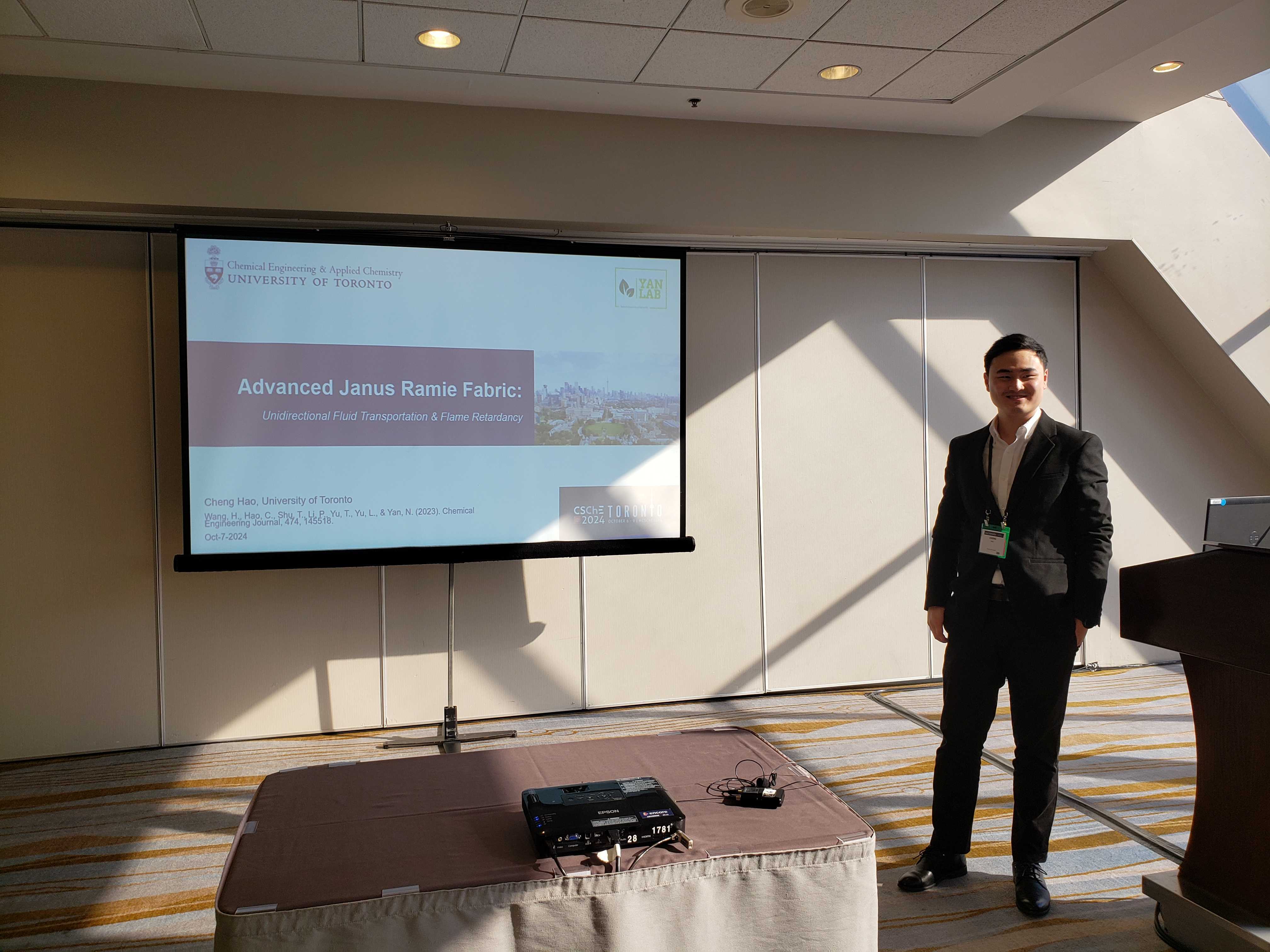
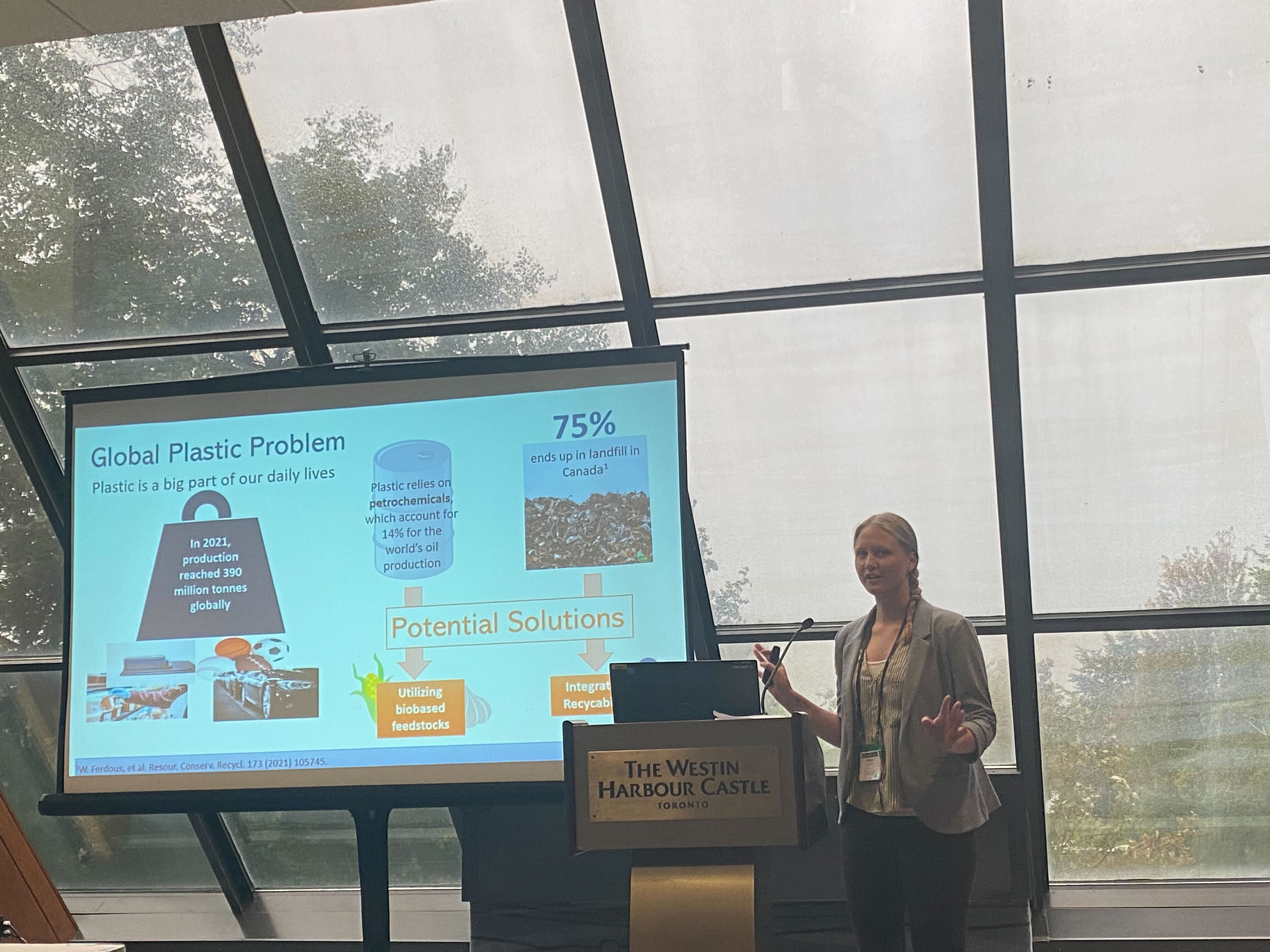
Ning Yan Lab Presents at Canadian Chemical Engineering Conference in Toronto

Five group members from Professor Ning Yan’s lab including Haonan Zhang, Cheng Hao, Nicole Tratnik, Araz Rajabi and Mohammad Mahaninia, showcased their work at the Canadian Chemical Engineering Conference (CSChE 2024) in Toronto from October 6th to October 9th.
At this four day conference the work of Professor Yan’s group was presented among many successful chemical engineers from across the country.

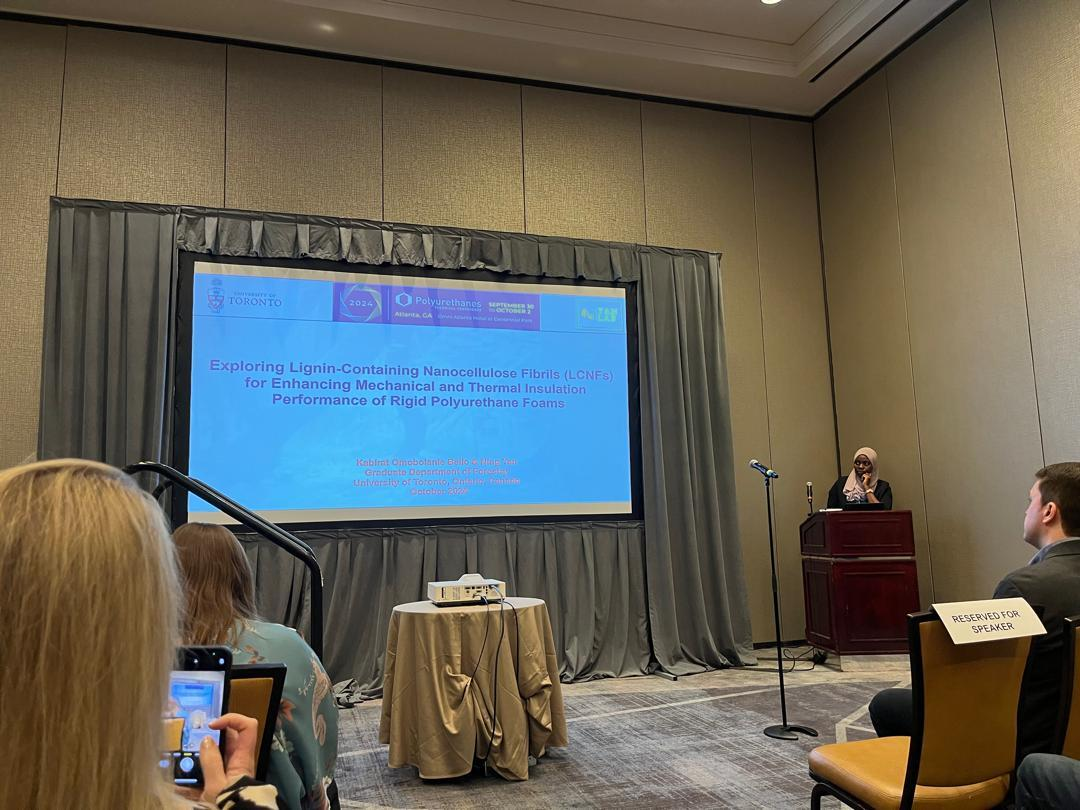
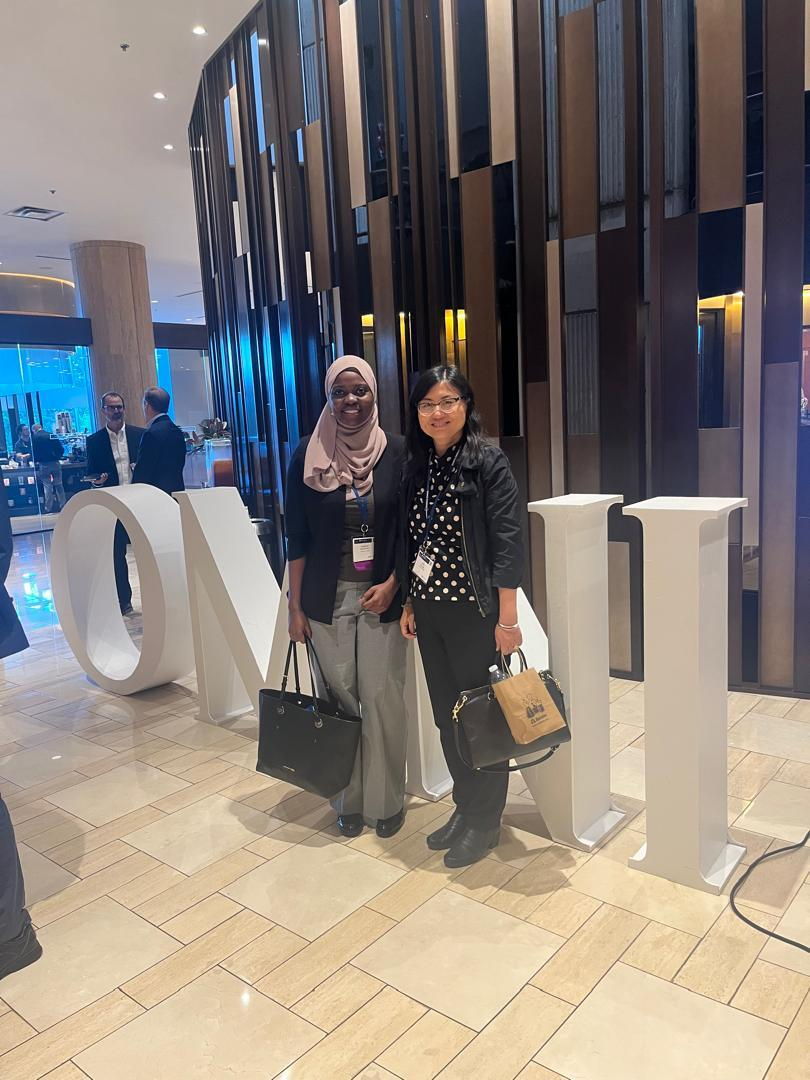
CPI Travel Honoraria Awarded for Research Presentation at the 2024 Polyurethanes Conference

Ph.D Candidate, Kabirat Bello, was awarded the CPI Travel Honoraria to present
her research at the 2024 Polyurethanes Conference in Atlanta, Georgia. Her
presentation was titled, “Exploring Lignin-Containing Nanocellulose Fibrils
(LCNFs) for Enhancing Mechanical and Thermal Insulation Performance of Rigid
Polyurethane Foams”.
Congrats Kabirat!

New Article: Self-healable, recyclable, and mechanically robust vitrimer composite for high-performance triboelectric nanogenerators and self-powered wireless electronics

A new article from Ning Yan’s lab has been published in Nano Energy written by Araz Rajabi-Abhari, Pandeng Li, Majid Haji Bagheri, Asif Abdullah Khan, Cheng Hao, Nicolas R. Tanguy, Dayan Ban, Longjiang Yu, and Ning Yan.

You can find the article here

Abstract

With growing concerns about sustainability, there has been significant research interest in fabricating triboelectric nanogenerators (TENGs) from materials capable of self-repair. Here, we presented a novel polyimine/graphite polypropylene (PI/GP) vitrimer composite as a tribo-positive material for harvesting biomechanical energy. The PI/GP exhibited mechanical robustness, self-healing properties after damage, and recyclability through physical or chemical methods. The GP provided a high dielectric constant, charge transport paths, and desirable surface roughness, resulting in an outstanding TENG performance at an optimized addition level of 30 wt% in the composite (PI/GP30). Under a force of 15 N and a frequency of 6 Hz, the PI/GP30 TENG generated a power density of 2571 mW/m². Moreover, a PI/GP30 TENG device with an area of 49 cm2 was able to generate a remarkable output voltage of nearly 1325 V, at a frequency of 6 Hz and under a vertical force of 15 N. Additionally, the PI/GP30 TENG device produced a peak-to-peak voltage of 1250 V, and an outstanding current of around 2 mA by hand tapping with a force of 35–40 N. The PI/GP30 TENG was utilized for real-life applications, including a triboelectric watchband for a self-powered watch, and wireless data transmission. Furthermore, the PI/GP30 TENG demonstrated excellent self-healing and recyclability, and these properties were examined in a mousepad power generator. This study highlights the excellent promise of PI/GP vitrimer composite for fabricating high-performance, mechanically robust, self-healable, and recyclable TENGs, enabling their applications in green biomechanical power generators and wearable and wireless communication devices.