New article: Flame-retardant Janus ramie fabric with unidirectional liquid transportation, moisture-wicking, and oil/water separation properties

A new article out of a collaboration between Dr. Ning Yan and Dr. Jing Chen’s labs has been published in Chemical Engineering Journal written by Huihui Wang, Cheng Hao, Tong Shu, Pandeng Li, Tianyi Yu, Longjiang Yu, and Ning Yan.

You can find the article HERE.

Abstract

Janus fabrics are often used for oil/water separation, fog-harvesting, and moisture-wicking clothing due to their unidirectional liquid transport (ULT) ability. However, Janus fabrics are usually mono-functional, and the fabrication process is complex. Moreover, the chemicals used are not green. Herein, a versatile Janus fabric from ramie with ULT, flame retardancy, and moisture-wicking features was fabricated using a facile and sustainable method. Chitosan and phytic acid were rapidly deposited on the surface of fabrics via electrostatic gravitation, and polydivinylbenzene was then used as coating after in situ polymerization. Reverse wettability was achieved on two sides of the Janus ramie fabric after the UV irradiation of one of the sides, which endowed the fabric with ULT ability. Janus ramie fabric exhibited a comparable water vapor transmission rate to that of pristine ramie fabric but a higher water evaporation rate because of its ULT ability, indicating an improved moisture-wicking ability. Furthermore, the Janus ramie fabric displayed a good oil/water mixture separation performance with a separation efficiency of over 98% and good mechanical abrasion and chemical resistance. More importantly, the Janus ramie fabric showed excellent flame retardancy, a self-extinguishing ability, and a high limiting oxygen index of 34.5%, and its heat release rate, heat release capacity, and total heat release rate were significantly lower than those of pristine fabric. Therefore, this versatile Janus ramie fabric demonstrates great potential for various practical applications.

New article: Self-healing, flame-retardant, and antimicrobial chitosan-based dynamic covalent hydrogelsNew article:

A new article from Ning Yan’s lab has been published in International Journal of Biological Macromolecules written by Mohammad H. Mahaninia, Zhuoya Wang, Araz Rajabi-Abhari, and Ning Yan.

You can find this article HERE.

Abstract

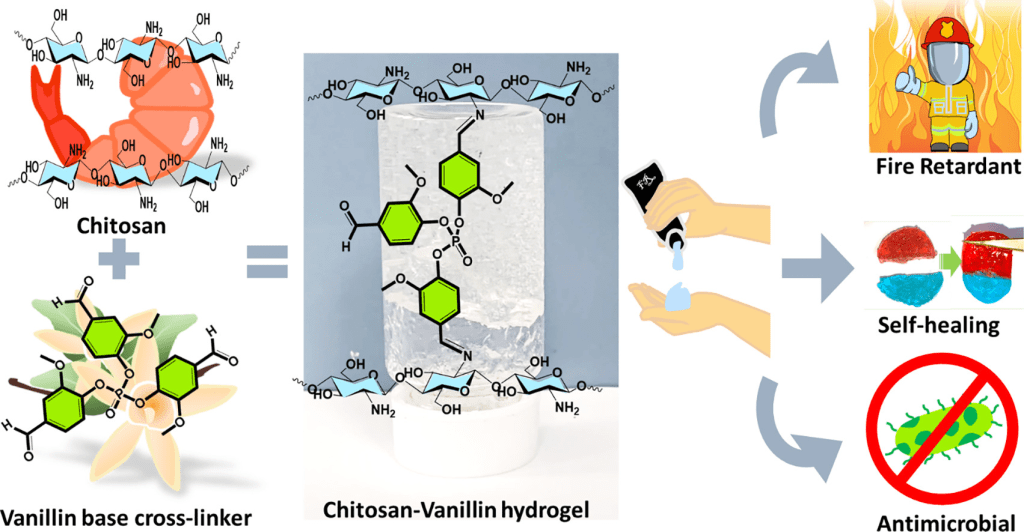
This study reports the fabrication of chitosan-based hydrogels with potential to be applied as a flame-retardant coating on skin or other surfaces. These hydrogels possess remarkable antimicrobial properties that are highly desirable for the protection of epidermises. Hydrogels in this study were prepared via the cross-linking reaction of chitosan with a vanillin-based cross linker containing flame-retarding moieties through Schiff’s base reaction. The synthesized hydrogels possess imine linkages enabling them to self-heal at room temperature. Self-healing abilities offered these hydrogels the ability to protect the skin for a longer time. One flame retarding mechanism of these hydrogels was by retaining the water in their polymeric network; thus, the role of bound and unbound water molecules was studied using DSC and Raman spectroscopy. The hydrogels synthesized in this study retained their flame-retarding properties even after drying due to the charring process that inhibited the pyrolysis process. Therefore, these chitosan-based hydrogels are able to prolong the protection time against fire.

New article: Nature-inspired surface for simultaneously harvesting water and triboelectric energy from ambient humidity using polymer brush coatingsNew article:

A new article from Ning Yan’s lab has been published in Nano Energy written by Araz Rajabi-Abhari, Mohammad Soltani, Kevin Golovin, and Ning Yan.

You can find this article HERE.

Abstract

Atmospheric water harvesting provides a promising, sustainable solution for alleviating the ever-growing water and energy crisis. Here, inspired by the Namib desert beetle, a wettability patterned surface was designed to simultaneously harvest water and triboelectric energy from ambient moisture. Indium tin oxide (ITO) conductive glass was coated by environmentally friendly perfluoropolyether (PFPE) polymer brushes to obtain a hydrophobic surface, decorated by hydrophilic patterns. The PFPE brushes enabled the droplet to slide down and served as the tribonegative material. The water and triboelectric energy harvesting performance of the hydrophilic-hydrophobic “patterned water and energy harvesting” (P-WEH) system was then investigated. In this regard, a water collection rate of 703 mg cm-2 h-1 was achieved when the P-WEH was placed within an artificial fog. The influence of pattern size and tilt angle, and their relationship with water droplet volume and speed on the triboelectric output, were measured. The effect of the water harvesting area on the output performance of the P-WEH was investigated. The P-WEH with an area of 100 cm2 and a tilt angle of 60° exhibited a high output current of 8.15 µA and a maximum output power of 3.35 µW. Finally, the P-WEH was integrated into a four-season greenhouse to demonstrate its application in reducing external water-energy consumption. This study presents insights into the design of simultaneous water and energy harvesting systems and may contribute to building a sustainable society.

Open Post-Doctoral Research Positions

Join Prof. Ning Yan’s Lab at the University of Toronto. We’re seeking a highly motivated Postdoctoral Researcher to work on developing functional bio-based polymers. This 1-year appointment can be extended. Start immediately.

Requirements:

  • Ph.D. in Polymer Chemistry, Materials Science, or related field
  • Strong background in polymer chemistry and materials characterization
  • Experience in biopolymer/material synthesis and modification, polymer/composite processing, and material characterization is highly desirable
  • Excellent communication and interpersonal skills

To apply, please email your CV and research statement to Prof. Ning Yan at ning.yan@utoronto.ca. Please note that only candidates selected for an interview will be contacted.

New Article: High-Performance, Light-Stimulation Healable, and Closed-Loop Recyclable Lignin-Based Covalent Adaptable NetworksNew Article:

A new article out of a collaboration between Dr. Ning Yan and Dr. Jing Chen’s labs has been published in Small written by Xiaozhen Ma, Xiaolin Wang, Honglong Zhao, Xiaobo Xu, Minghui Cui, Nathan E. Stott, Peng Chen, Jin Zhu, Ning Yan, and Jing Chen.

You can find the article HERE.

Abstract

In this work, high-performance, light-stimulation healable, and closed-loop recyclable covalent adaptable networks are successfully synthesized from natural lignin-based polyurethane (LPU) Zn2+ coordination structures (LPUxZy). Using an optimized LPU (LPU-20 with a tensile strength of 28.4 ± 3.5 MPa) as the matrix for Zn2+ coordination, LPUs with covalent adaptable coordination networks are obtained that have different amounts of Zn. When the feed amount of ZnCl2 is 9 wt%, the strength of LPU-20Z9 reaches 37.3 ± 3.1 MPa with a toughness of 175.4 ± 4.6 MJ m−3, which is 1.7 times of that of LPU-20. In addition, Zn2+ has a crucial catalytic effect on “dissociation mechanism” in the exchange reaction of LPU. Moreover, the Zn2+-based coordination bonds significantly enhance the photothermal conversion capability of lignin. The maximum surface temperature of LPU-20Z9 reaches 118 °C under the near-infrared illumination of 0.8 W m−2. This allows the LPU-20Z9 to self-heal within 10 min. Due to the catalytic effect of Zn2+, LPU-20Z9 can be degraded and recovered in ethanol completely. Through the investigation of the mechanisms for exchange reaction and the design of the closed-loop recycling method, this work is expected to provide insight into the development of novel LPUs with high-performance, light-stimulated heal ability, and closed-loop recyclability; which can be applied toward the expanded development of intelligent elastomers.

Professor Ning Yan has been elected into the Canadian Academy of Engineering

Congratulations Prof. Ning Yan on being elected a new Fellow for 2023!

The Canadian Academy of Engineering is the national institution through which individuals, who have made outstanding contributions to engineering in Canada, provide strategic advice on matters of critical importance to Canada and to Canadians. The CAE is an independent, self-governing, and non-profit organization established in 1987. Fellows of the CAE are nominated and elected by their peers, in view of their distinguished achievements and career-long service. Fellows of the Canadian Academy of Engineering are committed to ensuring that Canada’s engineering expertise and experience are applied to the benefit of all Canadians.

The Canadian Academy of Engineering works in close cooperation with other senior academies in Canada and internationally. The CAE is a founding member of the Council of Canadian Academies (CCA), and a member of the International Council of Academies of Engineering and Technological Sciences (CAETS), which includes 31 national engineering academies around the world. The CAE is also a member of the Partnership Group for Science and Engineering (PAGSE), an association of more than 20 Canadian organizations in science and engineering, whose mandate is to educate and inform federal Parliamentarians, decision makers and other leaders of the importance and significance of Canadian research and innovation to economic development, and society as a whole.

“The election of these exceptional faculty and alumni to the Academy is an important recognition of their impact as engineering innovators, educators and leaders, both nationally and globally,” says U of T Engineering Dean Christopher Yip. “On behalf of the Faculty, congratulations to all our new CAE fellows.” 

You can find more information HERE.

Grand Prize Winner in the Excellence in Thermoset Polymer Research Competition

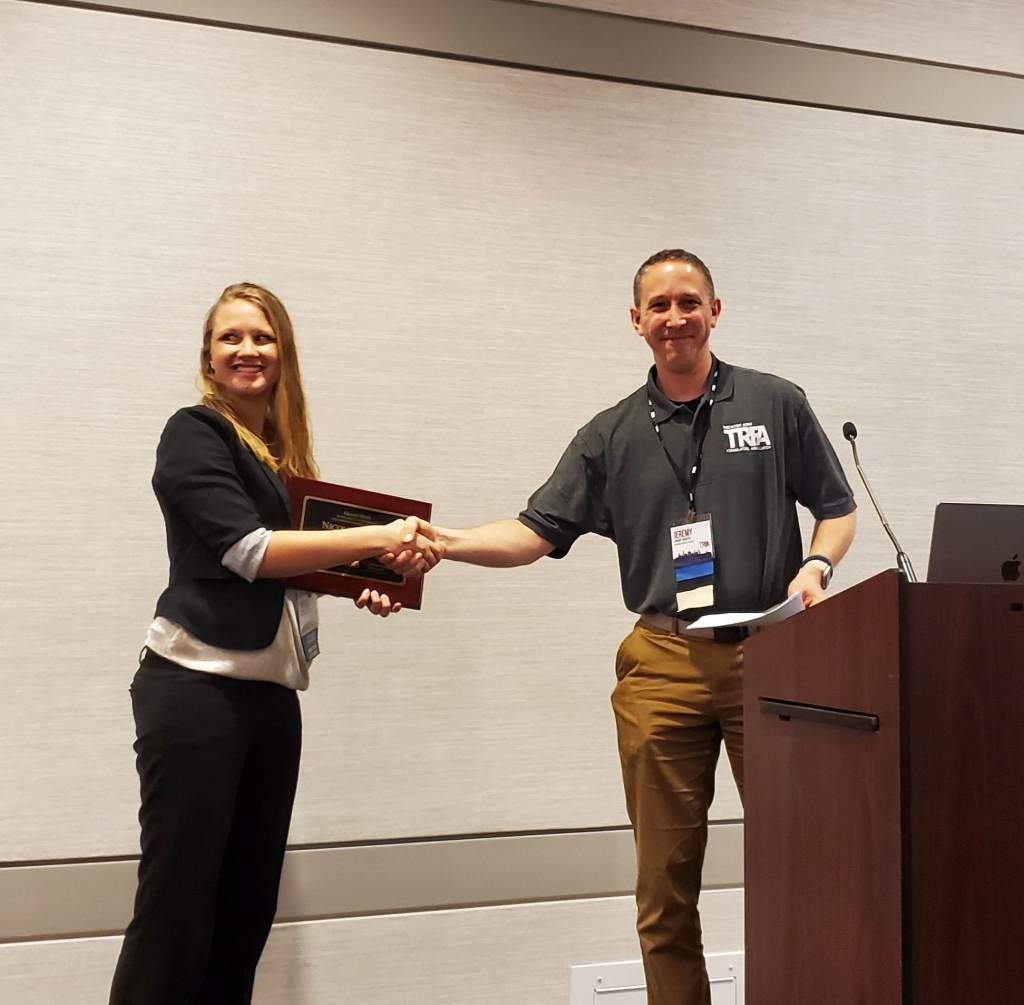
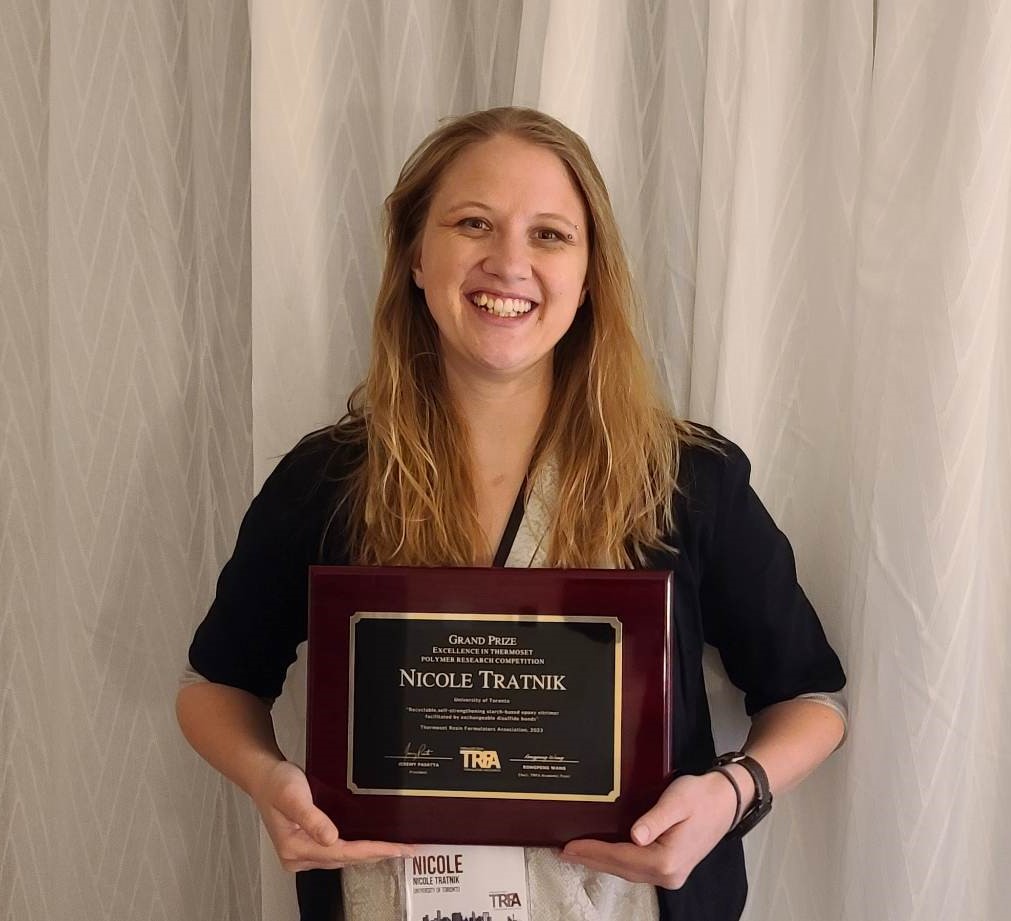
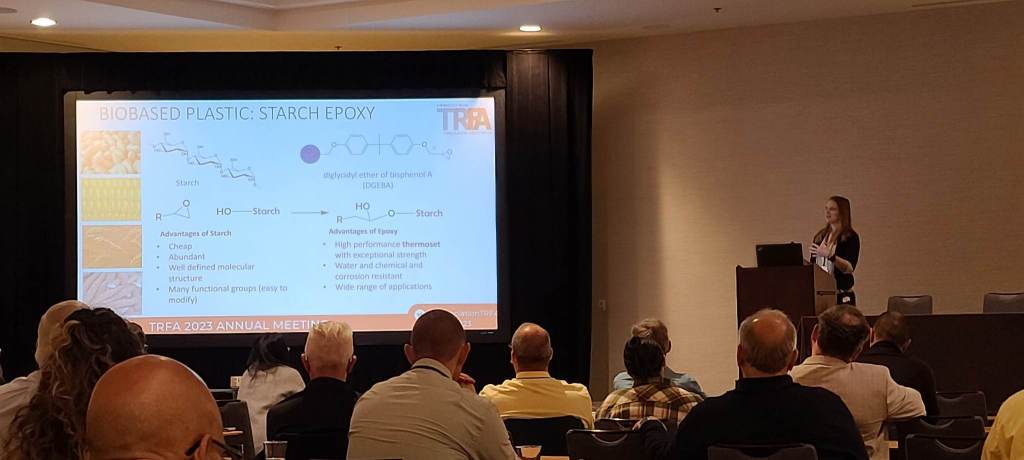
Ph.D. Candidate Nicole Tratnik won first prize in the Excellence in Thermoset Polymers Research Competition hosted by the Thermoset Resin Formulators Association for her paper titled “Recyclable, self-strengthening starch-based epoxy vitrimer facilitated by exchangeable disulfide bonds”. She was flown out to Denver, CO to present her work at the TRFA Annual Meeting with over 120 attendees. Her award-winning paper can be found here.

Congratulations Nicole!

You can read more about the news on the UofT Chem Eng website here.

New Article: Transient and recyclable organic microwave resonator using nanocellulose for 5G and Internet of Things applications

A new article from Ning Yan’s lab has been published in Chemical Engineering Journal written by Nicolas R. Tanguy, Maryam Moradpour, Mandeep C. Jain, Ning Yan, and Mohammad H. Zarifi.

The article can be accessed for free until June 13, 2023 by clicking here.

Abstract

The rapid development of electronics has caused the accumulation of electronic waste that is threatening the environment and human health. The deployment of the Internet of Things (IoT), enabled by 5G microwave communication technology, will involve an increasing number of electronic devices. Microwave communication devices consist of petroleum/ceramic-based substrates and metallic traces that are non-biodegradable. Here, we report a smart, flexible, and transient organic microwave resonator (TOMR) using cellulose nanofibrils (CNF) nanopaper as substrate and poly(3,4-ethylenedioxythiophene):polystyrene sulfonate (PEDOT:PSS) as conducting trace. The device produced a resonant profile with the maximum transmission coefficient (S21) amplitude of −14.95 dB at a resonant frequency of 2.75 GHz under ambient conditions (20 °C, 30% relative humidity (RH)). The TOMR demonstrated sensing capabilities, wherein increasing the %RH modulated the device’s resonant amplitude (-29 mdB/%RH from 0% to 50% RH and −90 mdB/%RH from 50% to 90% RH) and resonant frequency (3600 kHz/%RH). Moreover, the PEDOT:PSS trace could be reclaimed, recycled, and redeposited on a CNF nanopaper, which enabled the fabrication of a TOMR that displayed a similar resonant profile. Hence, this study demonstrates the first transient organic microwave resonator embedded with sensing capabilities and introduces a framework to minimize the environmental impact of 5G microwave communication devices for the IoT.