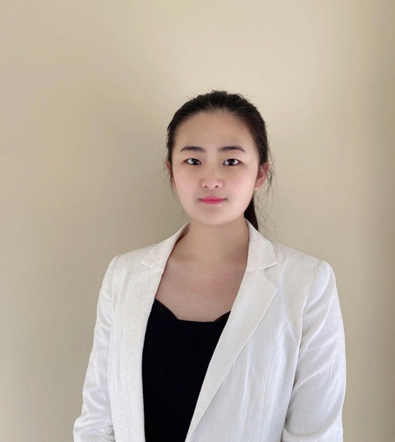
Last week, a member of Prof. Ning Yan’s Lab, Lavia Li, successfully passed her qualifying exam signifying she is able to continue with her PhD studies. In the next few years she will continue her work on the studies on engineering strategies of graphite in next generation battery.
A new article from Ning Yan’s lab has been published in the Carbohydrate Polymers written by Sanming Hu, Zhijun Shi, Kun Chen, Xiao Chen, Hongfu Zhou, Ning Yan, Guang Yang,
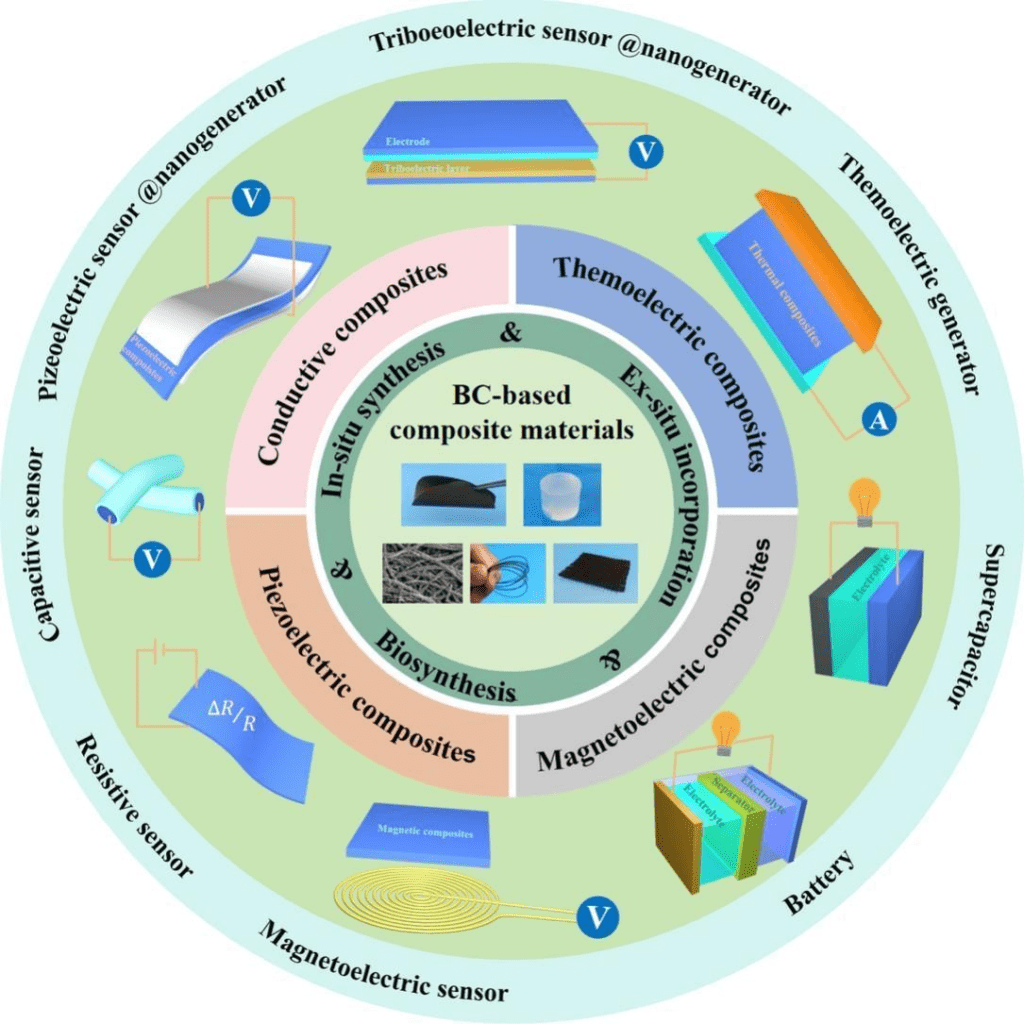
The proliferation of electronic devices has led to a substantial increase in non-degradable electronic waste (e-waste), posing significant environmental challenges. Consequently, biodegradable natural polymers have garnered considerable attention as sustainable alternatives to conventional non-degradable materials in electronic applications. Bacterial cellulose (BC), a natural polymer characterized by abundant hydroxyl groups and a three-dimensional (3D) nanonetwork structure, exhibits exceptional properties including high purity, superior mechanical strength, excellent water retention capacity, non-toxicity, renewability, and complete biodegradability. These unique attributes, coupled with its distinctive structural features, render BC as a promising green matrix material for developing functional composites in eco-friendly electronic devices. This review provides a systematic analysis of various eco-friendly composite materials derived from BC, covering conductive, piezoelectric, magnetoelectric, and thermoelectric composites. Additionally, the fabrication methodologies for BC-based composites, including in-situ chemical synthesis, ex-situ incorporation, and biosynthesis techniques, are comprehensively analyzed. Furthermore, the applications of BC-based composites was explored in diverse fields such as sensors, energy storage systems (batteries and supercapacitors), and energy harvesting devices (nanogenerators). Finally, we deliver a critical evaluation of the current challenges and future research directions for BC-based composites in the development of sustainable electronic devices.
A new article from Ning Yan’s lab has been published in the Journal of Materials Chemistry A written by Keerti Rathi, Viktoriya Pakharenko, Otavio Augusto Titton Dias, Colin van der Kuur, Ning Yan and Mohini Sain
Our research demonstrates a one-step dual-process acid treatment approach for modifying graphite, which increases its interlayer distance and generates nanoscale holes, thereby effectively shortening the lithium-ion diffusion pathway without the need for heteroatom doping. Compared with pristine graphite (PG), the expanded holey graphite (EG) produced by this process achieves significantly enhanced electrochemical performance while maintaining structural integrity. The EG shows excellent electrochemical performance, reaching a specific capacity of 179.45 mAh g−1 and retaining 89.3% of its capacity after 300 cycles in a full pouch cell combined with a commercial NMC523 cathode. High coulombic efficiency (approximately 93.8%) and improved cycling stability confirm the durability of the etched graphite. Beyond mere performance considerations, the study elucidates the degradation mechanisms inherent in commercial lithium-ion batteries (LIBs), thereby offering dependable guidance for electrode surface engineering and the optimization of cycling protocols. With this scalable and impurity-free approach to modification, purified etched graphite emerges as a promising candidate for next-generation LIB anodes, satisfying the high energy requirements and durability necessary for electric vehicles and advanced energy storage systems.
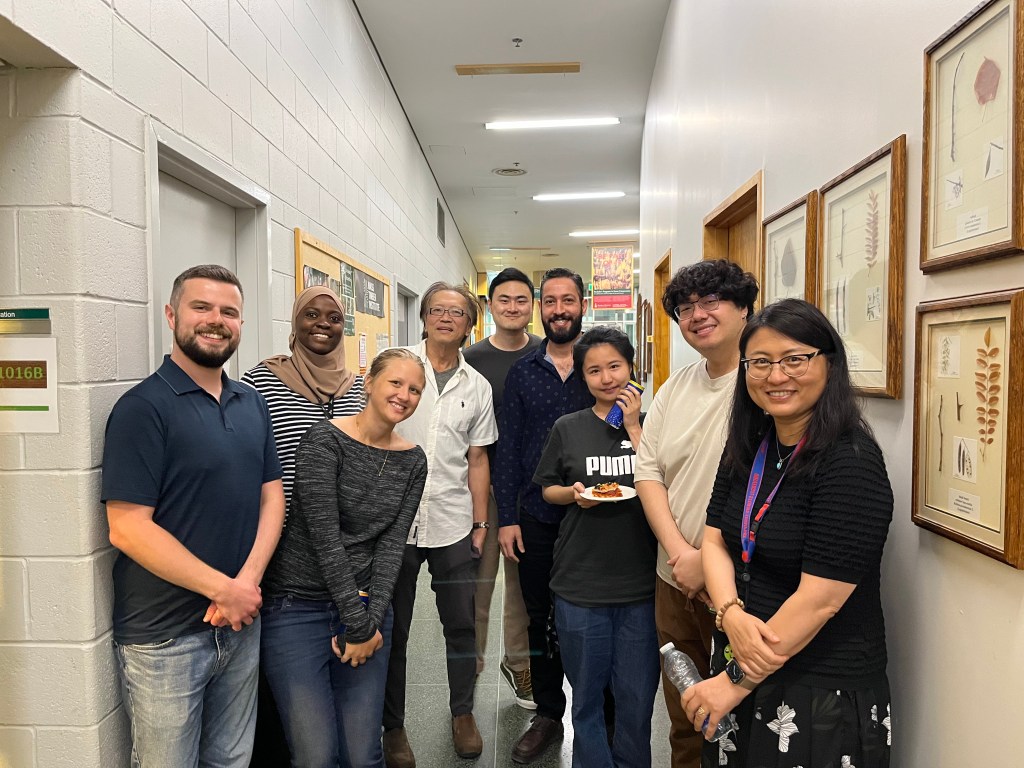
Today we celebrate Tony Ung’s retirement, a staple of the Faculty of Forestry who has helped keep things running in the Earth Science Center. Whenever we had an issue or a question, Tony was always there to give us guidance. He was never too busy to lend a hand even though he had many, many responsibilities. Our lab would look a lot different without his help. He will be sorely missed. Congratulations on your retirement Tony!
We are proud to share that Dr. Mohammad Mahaninia has been awarded the prestigious 2025 Chair’s Discovery Award from the Department of Chemical Engineering & Applied Chemistry at the University of Toronto. This recognition honors his exceptional research productivity and innovative contributions to sustainable polymeric materials—including flame retardants and water purification systems.
On June 10th 2025, Mohammad successfully defended his PhD thesis, “Development of Environmental-friendly Chitosan-based Multifunctional Covalent Adaptable Network (CAN) Polymer Materials”. Congrats Moe! Great work.
Carbon Dioxide Responsive Polymers: Design, Properties, and Applications
Carbon dioxide (CO₂) responsive polymers exhibit reversible property changes triggered by atmospheric-pressure CO₂, offering promising potential for various applications. These smart materials provide distinct advantages over conventional stimuli-responsive polymers, notably the use of CO₂ as a nontoxic, cost-effective, and environmentally benign trigger. This lecture will explore the molecular design of CO₂-switchable systems, focusing on polymers with tertiary amine and amidine functionalities. These materials undergo reversible transitions from hydrophobic to hydrophilic states via protonation and deprotonation, a mechanism that avoids accumulation of waste byproducts. Professor Cunningham will discuss key design considerations, such as functional group basicity and concentration, and their role in optimizing switching efficiency. Practical implementations of these materials will be showcased, including switchable nanoparticles, viscosity modifiers, hydrogels, coatings, and surfaces. Applications range from smart coatings to forward osmosis water purification technologies, highlighting the versatility and real-world relevance of CO₂-responsive polymer systems.
When: June 10 @ 10:00 am
Where: Room WB215
Host: Prof. Ning Yan
Bio:
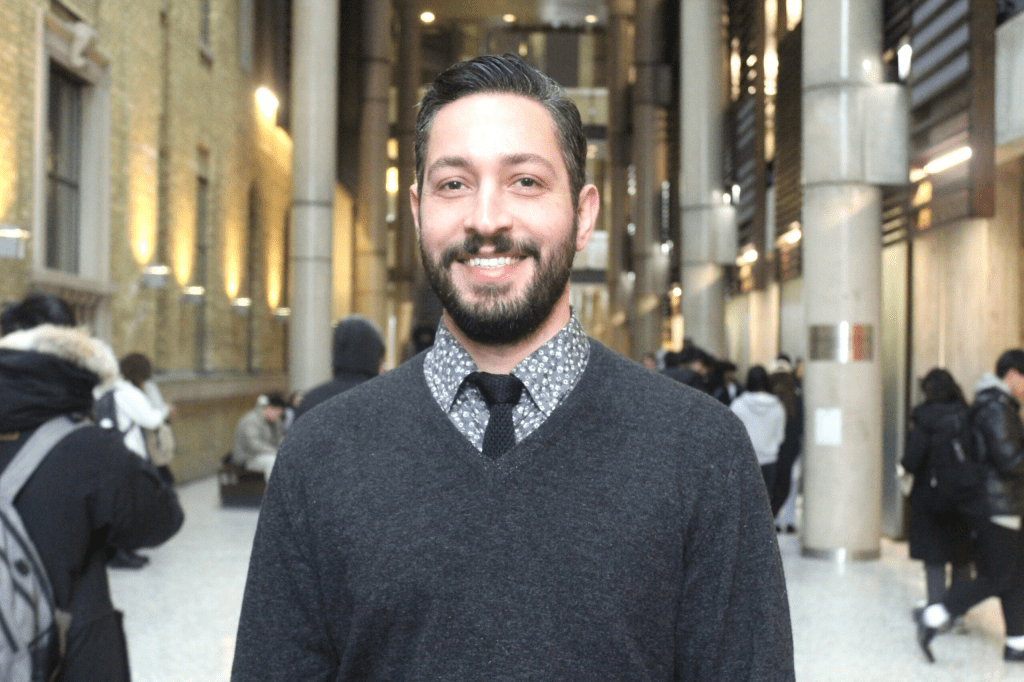
Professor Michael Cunningham holds the Donald and Sarah Munro Research Chair in Chemical Engineering at Queen’s University. His research focuses on polymer nanoparticle synthesis, CO₂-switchable polymers, and sustainable polymeric materials, especially those combining synthetic and bio-based components. He currently serves as Chair of the International Polymer Colloids Group and has received multiple prestigious awards, including the NSERC Brockhouse Canada Prize for Interdisciplinary Research, the Canadian Green Chemistry and Engineering Award, and the Macromolecular Science and Engineering Award. Dr. Cunningham is a Fellow of the Chemical Institute of Canada, the Canadian Academy of Engineering, and the Engineering Institute of Canada. He has made significant contributions to the field of polymer science, particularly in the development of environmentally responsive and sustainable materials.
OMNI recently interviewed Professor Ning Yan, focusing on sustainability and the innovative approaches driving environmental responsibility. In the discussion, Professor Yan shared insights on sustainable practices and advancements that contribute to a greener future.
She highlighted key developments in eco-friendly technologies, emphasizing the importance of scientific innovation in tackling global sustainability challenges. Her research offers valuable perspectives on creating solutions that reduce environmental impact while fostering long-term sustainability.
Check out the full interview to learn more about Professor Yan’s work and vision for a sustainable future.
A new article from Ning Yan’s lab has been published in Chemical Engineering Journal written by To Yu Troy Su, Rafaela Aguiar, Nello D. Sansone, Cheng Hao, Ning Yan, and Patrick C. Lee.
This study presents the first integration of spray dried (SD), non-modified, lignocellulosic nanofibrils (LCNF) into polylactic acid (PLA) by melt blending. Originating from industrial forestry waste, SD LCNFs are an inexpensive, non-toxic, and abundantly accessible drop-in filler whose production is facile, continuous, and highly scalable. Addition of SD LCNF into PLA yields enhanced barrier and mechanical performance due to SD LCNF’s alteration of the crystalline microstructure and fracture dynamics. Incorporating 1–1.5 wt% of SD LCNFs into PLA results in significant enhancements: tensile strength by 32.8%, toughness by 44.6%, water vapor barrier performance by 38.8%, and oxygen barrier properties by 26.4%, compared to neat PLA. Their nucleating capability hastens isothermal crystallization of PLA composites by over 90%, enabling faster processing times. For the first time, in-situ polarized optical microscopy is used to visualize fracture toughening mechanisms in PLA under strain, revealing a direct link between mechanical property improvements and the role of SD LCNFs as craze nucleators in PLA. Additionally, the in-situ observation of crystallization kinetics highlights how SD LCNFs influences PLA microstructure, correlating these structural changes with enhanced barrier and mechanical properties. The composite’s optical clarity and UV shielding capabilities are assessed, confirming its potential for specialty packaging applications.
A new article from Ning Yan’s lab has been published in Materials Horizens written by Kaiwen Chen, Luyao Chen, Xianfu Xiao, Cheng Hao, Haonan Zhang, Tongtong Fu, Wei Shang, Hui Peng, Tianyi Zhan, Jianxiong Lyu and Ning Yan.
Abstract Inspired by cactus spine and desert beetle back structures, we developed a wood-based wedge-shaped surface with gradient wettability for efficient and controlled spontaneous directional liquid transport. Utilizing the natural anisotropic and porous structure of wood, the wedge-shaped surface exhibited a continuous gradient wettability after chemical treatments combined with UV-induced modifications. The resulting surface enabled highly efficient directional liquid transport with transport rates reaching up to 8.9 mm s−1 on horizontal placement and 0.64 mm s−1 on vertical surfaces against gravity. By integrating geometric curvature and surface energy gradients, the innovative design achieved synergistic Laplace pressure-driven and wettability-driven liquid motions. To further demonstrate its potential for practical application, a fog-driven power device constructed using the gradient wettability wood with cactus spines not only enhanced water harvesting and energy conversion capabilities but also offered an environmentally friendly system. This study expanded the design toolbox for bioinspired liquid management surfaces, offering promising applications in water resource management, energy harvesting, and microfluidic devices.




 Yan Lab