
A new article from Ning Yan’s lab has been published in the Carbohydrate Polymers written by Sanming Hu, Zhijun Shi, Kun Chen, Xiao Chen, Hongfu Zhou, Ning Yan, Guang Yang,
You can find the paper here.
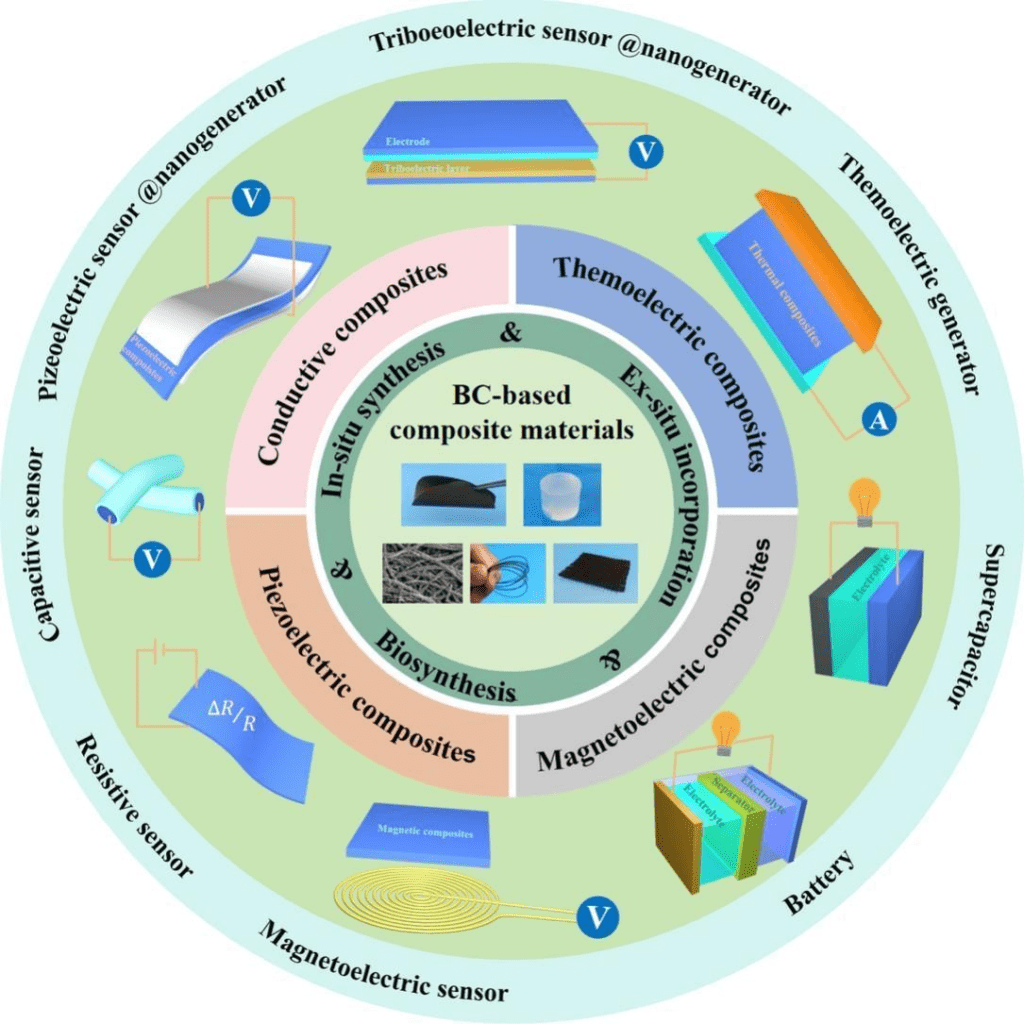
Abstract
The proliferation of electronic devices has led to a substantial increase in non-degradable electronic waste (e-waste), posing significant environmental challenges. Consequently, biodegradable natural polymers have garnered considerable attention as sustainable alternatives to conventional non-degradable materials in electronic applications. Bacterial cellulose (BC), a natural polymer characterized by abundant hydroxyl groups and a three-dimensional (3D) nanonetwork structure, exhibits exceptional properties including high purity, superior mechanical strength, excellent water retention capacity, non-toxicity, renewability, and complete biodegradability. These unique attributes, coupled with its distinctive structural features, render BC as a promising green matrix material for developing functional composites in eco-friendly electronic devices. This review provides a systematic analysis of various eco-friendly composite materials derived from BC, covering conductive, piezoelectric, magnetoelectric, and thermoelectric composites. Additionally, the fabrication methodologies for BC-based composites, including in-situ chemical synthesis, ex-situ incorporation, and biosynthesis techniques, are comprehensively analyzed. Furthermore, the applications of BC-based composites was explored in diverse fields such as sensors, energy storage systems (batteries and supercapacitors), and energy harvesting devices (nanogenerators). Finally, we deliver a critical evaluation of the current challenges and future research directions for BC-based composites in the development of sustainable electronic devices.
 Yan Lab